


Blue Green Algae
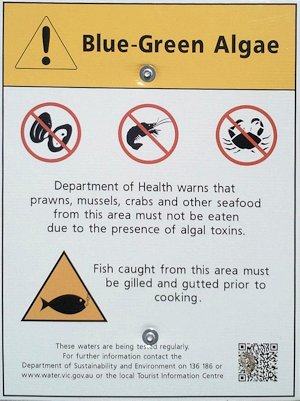
LAKE TYERS JAN 2013 SIGN POSTED
BLUE GREEN ALGAE RISK UPDATE
Personally I have not heard any talk of a Blue-Green algae outbreak in our lake, and if the WEEKLY UPDATES are to be taken literally our lake is not mentioned. However as the recent sign posted at Boat Ramp number 2 shows, it will pay to be cautious. I suggest you visit the WEEKLY UPDATES site and form your own conclusion.
My own theory about the 2012 outbreak:
In short Lake Tyers has had a lot of rain run down into it, from its catchment area, but unlike the Mitchell River and to a lesser extent the Nicholson and the Tambo, the catchment area does not have extensive farming/gardens that use high levels of Phosphates to promote crop growth. These rivers themselves do not have a Blue Green Algae threat. It is generally accepted that Australian soils are amongst the lowest phosphate soils in the world and to do any serious farming/cultivation, phosphate must be added. However phosphates are also soluble and can wash out of the soil they have been applied to.
The recent rains have washed a lot of phosphates into the main Lakes Entrance system and it will take a while for this large body of water to flush itself of excess phosphates. Unfortunately what works for promoting the growth of lettuces for example, and many other plants, also works very well with algae. Because Australian inland and estuary waterways are generally a reflection of the soil in the catchment area, they are used to getting by with minimal phosphate levels. But when the phosphate is quickly built up by wash off from farms, the system goes out of balance and the quickest to take advantage of it win out.
In this present case the blue green algae are very quick to multiply and spread quickly. Unfortunately these algae contain chemicals that if ingested in large quantities are very dangerous, and in lesser exposures can cause skin rashes and other negative health effects. Generally people are warned to be very cautious as they may have very little understanding of what it will mean to be exposed to these micro-organisms.
If you have not had any experience with these micro-organisms (and they do naturally occur in the lake after all, but usually in very small harmless amounts) then we suggest you err on the side of caution and be careful in and around the main lake system.
Lake Tyers does have strong algal growth from time to time, but these bright green algaes (Chlorophyta) should not be confused with the darker coloured Blue Green Algaes (Cyanophyta).
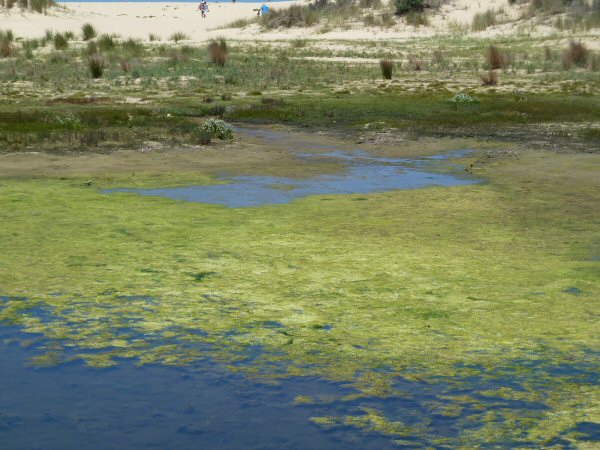
The bright green algae actually provides necessary safe food and cover for the baby fish in our lake.